
“Naku mahabang kwento ito– mga tatlong oras, hindi naman kayo nagmamadali di ba?” Gerik Chua said with a laugh, his eyes narrowing, his laughter contagious.
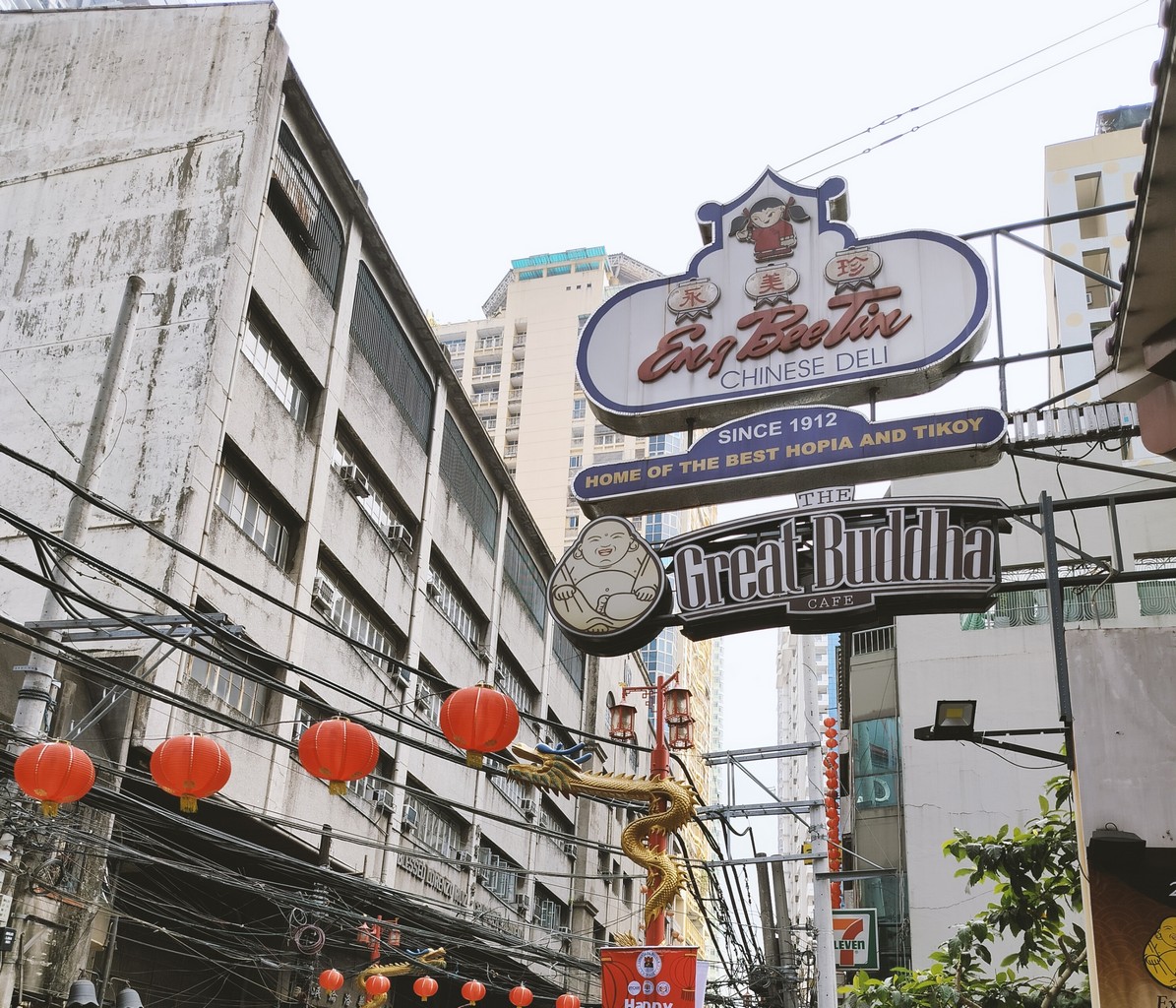
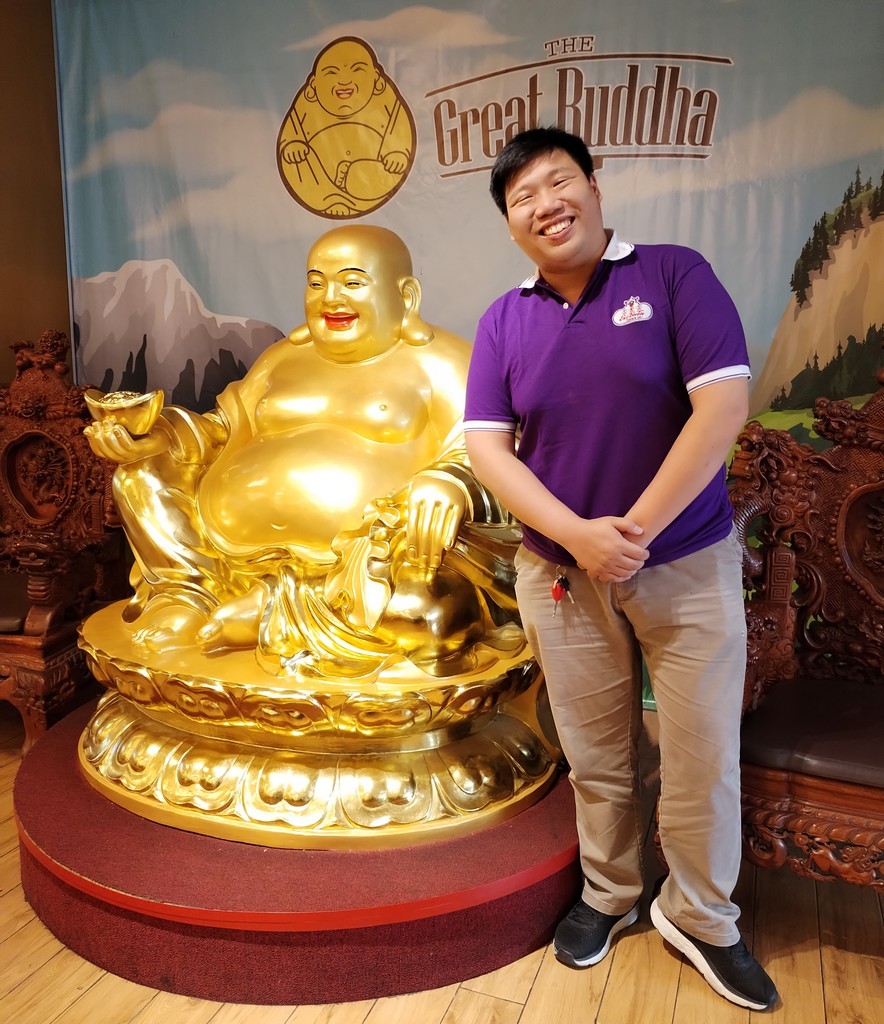
We arrived at the Great Budda Café for brunch with Gerik, Vice-President for Operations of Eng Bee Tin, and we caught him in the middle of telling the company’s story.
It was a story he probably told hundreds of times to so many people and interviews, yet he still told it with such passion and enthusiasm as if it was the first time he was sharing– from how his great grandfather started the business, the struggles of his dad to keep the store open, the embarrassment of being the talk of Chinatown for bouncing checks, to Cory Quirino and how she became the missing ingredient to their ube hopia recipe—you just felt how much he loved the business.

“VP lang ako in title, pero ako ang all-around troubleshooter ng lahat.” “Lahat” includes the entire Eng Bee Tin group, which includes The Great Buddha Cafe in Ongpin Street, Binondo, Manila; Eng Bee Tin Chinese Deli; Cafe Mezzanine; and Mr Ube Rice and Noodle House.
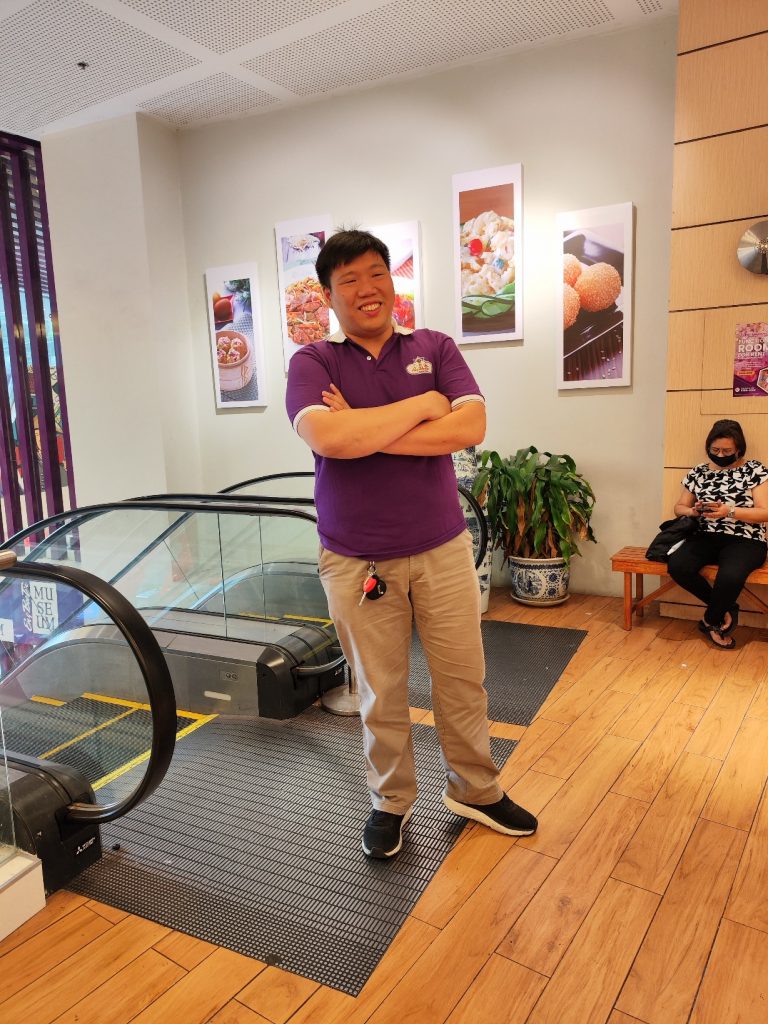
Gerik is the eldest of the children, and is part of the fourth-generation owner of the Chinese deli chain. He is a graduate of BS Business Administration Major in Marketing Management of University of Santo Tomas (UST) in 2012, trained in Baking Science and Technology at the American Institute of Baking in 2012, Gerik Chua is also Executive Director of the Filipino Chinese fire volunteer brigade called “TXTFIRE Philippines.” Chua is also Past President of Philippine Society of Baking (PSB).
RIGHT BACK WHERE WE STARTED
Like many Chinese families who migrated to the Philippines, Gerik began retelling their story with his great grandfather, Chua Chiu Hong who was originally from Xiamen, China.
Chiu Hong founded the business in 1912, calling it Eng Bee Tin, which contrary to what many believe, isn’t based on any person or family member.

ENG BEE TIN means FOREVER, BEAUTIFUL and PRECIOUS in Hokkien.
The small store was located along Nueva St. in Binondo. If you’ve visited the current Eng Bee Tin building, Gerik said the original store was located on the spot where the escalators leading to the second floor are.
The business was later on inherited by his son Menito, who then handed it over to Gerry, Gerik’s father.
Gerry was just 16 back then, and at the time, the store was struggling and on the brink of near bankruptcy.
One of their main problems was transporting their hopia to other stores. As they were crammed into jars most of them arrived flat looking like piyayas, that nobody wanted to buy.
So, they tried a different approach making the crust thicker to preserve the shape and survive the transport. It did solve the problem of their flat crushed hopia, but the downside was that it also became too hard.

“Hopiang di mabili, may amag sa tabi–” an older generation knew this song too well, and it was the unofficial jingle of their hopia said Gerik.
But bad rep and dangerously hardened hopia were the least of their problems. Since they were cash-strapped at that time, Gerik said they issued checks to pay off everything—so many checks his father had to call the bank everyday just to ask for a bit of extension so that the checks wouldn’t bounce and make them the talk of Chinatown.
“Eight checks a day yung nagbabounce, kasi yung tatay ko, ginawa nang pera ‘yung tseke,” Gerry once shared in another interview. “Galing eskwelahan, pag-uwi ko kailangang magtanong sa bangko kung magkano utang namin.”

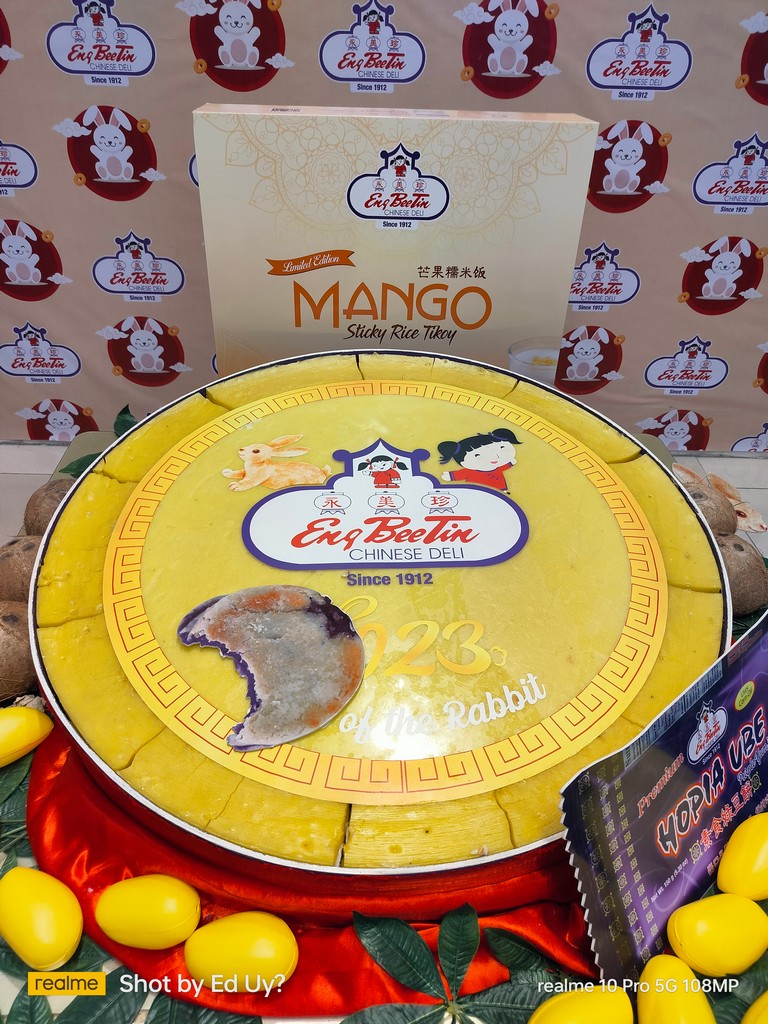
Their small bakery sold a variety of Chinese treats for decades, including peanut balls, but their hopia and tikoy were the best-sellers. Back then, hopia only came in two flavors—baboy and monggo, and as for the tikoys, there were only white and brown.
HOPING ON UBE HOPIA
So how did they come up with an ube-flavored hopia?
Gerik continued his story; “There was this one grocery that my dad went to everyday for what he calls “market research.” Because he was always there without buying anything, there was a time that the store owner actually assigned guards in plain clothes to trail the suspected “shoplifter.”

One hot day, his father went to the store to buy ice cream and he asked the saleslady which was their -best-selling flavor. To which she answered—”UBE.”
That was the first time his dad bought something significant from the store—”He bought six ube jars, went home and began experimenting how to blend the ube with hopia,” said Geric. “After tasting it, he knew he was on to something.
But he wanted to be sure first before selling it on their stores. Gerry initially baked samples for friends to try it out. Most said it was delicious, but when he asked if they’d buy it, their answer was not the one he was hoping for—simply because a hopia ube was unheard of.

Still, he believed in his innovation and continued producing the first-ever hopia ube. He even traveled to Pampanga to master the art of ube-making under the tutelage of the best halayang ube makers. He patiently worked on his ube hopia. When the ube flavor was introduced, orders trickled in. Things eventually picked up.
But the rest is still not history.
CORY AND PURPLE FIRE TRUCKS
The Eng Bee Tin hopia empire story wouldn’t be complete without this detour.

Gerik said his father was known in their area for two things—as the owner of the store where no one buys, and as the “crazy” guy who would direct traffic whenever there was a fire or emergency.
“What they didn’t know was that my dad was doing that so that the firetrucks could go out of the street as he is one of the volunteer firefighters.
“Being a volunteer firefighter was his outlet, when he’s riding the firetruck that’s when he can forget about his business problems and just help people.”
Who knew that his volunteer work would be the spark that would turn their business around.
“Cory Quirino was shooting in Binondo for her show CitiLine and at that time she was featuring a Chinese doctor, a Chinese herbal drugstore, Chinese temple and fire volunteer—and because my dad was good at translating Chinese, he became the unofficial tour guide and interpreter for the host and crew.
“Nahirapan sila ng husto interviewhin yung Chinese Temple and it was my father talked them into agreeing.”
“After the shoot Cory chanced upon a neon sign that said “Hopia Ube” available here. And my dad told her that it was his invention, Cory promised she’ll come back to feature it next time.
Thinking it was just a courteous way of thanking him, my father never thought much about it until Cory’s staff gave him a call to arrange an interview.”
“If it wasn’t for his volunteer firefighter work, my father would not have met Cory Quirino and she probably wouldn’t notice the neon Ube Hopia sign.”
“Dahil nga sa ube bumangon kami, kaya ayun ang color ng firetrucks namin.”
The ube-colored fire trucks you see around town are the result of the familys social-oriented efforts.
When sales skyrocketed and Eng Bee Tin became synonymous to hopia, Gerry vowed to donate a firetruck to the firestation—even before buying a car for the family.
They’ve already donated 10 ube-firetrucks and 3 ambulances.
“Both my Dad and I started very young in firefighting,” said Geric. “We have put together the largest volunteer firefighting organization in the Philippines, Txtfire.”
Binondo, or what is known as Chinatown, has become known for the best volunteer fire-fighting unit in the city. It began as the residents’ response to the frequent fires in their community. Txtfire now has more than 4,500 affiliate firefighters nationwide.
“Besides the fire trucks and ambulances, we have a coffee shop, Café Mezzanine, that for 15 years has been donating 100 percent of its revenues to our firefighting cause.”

During the first months of the pandemic, Gerik and other volunteers went around the city to distribute bread to several communities around the city.
UBE-LIEVABLE SUCCESS
Since that TV feature several decades ago, Eng Bee Tin has enjoyed continued success, becoming the top of mind choice for hopia and tikoy especially during the Chinese New Year celebrations. Gerik attributes their recipe for success is innovation, creativity, and ensuring customer satisfaction.
The new generation of Chuas are now in charge of operations: Gerik for operations, brother Gerald, who’s handling the production, and sister Geraldyn, who is taking care of finances.
Gerik credits his father for always coming up with innovative ideas—offering new flavors and upgrading their packaging. Besides ube, they continuously introduce new flavors such as buko pandan, kundol, durian, pina, as well as new variants like mochipia ube, pork floss hopia, ube cheese combi, etc. For millennials they created the custard series which unlike traditional hopia is best served cold as the filling tastes a bit like ice cream.
They are also the first to use corn oil instead of lard and now they also offer sugar-free options. For the packaing they were the first to vacuum pack tikoy to make it last longer because they don’t use preservatives—it has since become the standard in the tikoy industry.
“Kami rin ang unang naglabas ng tikoy na four flavors in one box and tikoy na sugar-free for diabetics. We also came up with savory tikoy versions like—salted egg, minced pork, chorizo, even salted fish.”
They have also invested heavily in technology and their machines can create 60 pieces of hopia in a minute—that’s 1 hopia made every second! They also have a steamer that fits about 400 tikoys.
Also passed down to them were important lessons to gain customer loyalty. On the cashier you’ll read “Do Good Deeds,” which has been their mantra. Another tip they learned from his father, is to be customer-centric—to never ever let the customer feel short-changed—starting with their products.
“We only use high-quality ingredients. Hindi kami nagsa-substitute ng mumurahin. Di bale nang maliit ang kita, ang mahalaga, babalik-balikan ka.” He points out the superior qualities of their tikoy, for example. “Mapapansin mo ang tikoy namin makapal, tama ang mga timbang, malagkit pero di dumidikit sa kawali.” Other tikoys melt, he says, and stick to the frying pan when cooked.
To equip himself with the skills needed to continually innovate and propel the business, Gerik studied different courses in the US and Taiwan—baking science, Chinese pastry, and business.
BAKERY FAIR 2023
Despite his initial claim we were able to wrap up the entire Eng Bee Tin story in about two hours, with plenty of time to talk about the other thing that has been keeping Gerik busy.

He is the current president of the Filipino Chinese Bakery Association, Inc. (FCBAI) as innovation has been crucial to the success of Eng Bee Tin, Gerik has also been a staunch advocate of promoting the baking industry, introduce new technology to help local bakeries cope with the challenges presented by the post pandemic situation.
The first face to face expo, FCBAI’s much-awaited “Bakery Fair 2023” will be happening March 2, 3 and 4, 2023 at the World Trade Center in World Trade Center at Sen. Gil J. Puyat Ave. cor. Diosdado Macapagal Blvd., Pasay City.


The “Bakery Fair” is the biennial (once every two years) civic project of the Filipino Chinese Bakery Association, Inc. (FCBAI) to promote and uplift the Philippines bakery industry and support socio-economic development. FCBAI is also part of the Federation of Filipino Chinese Chambers of Commerce & Industry, Inc. (FFCCCII).
There will be over a hundred of participating bakeshops and seminars throughout the three day event. Event highlights include a cake competition as well as a bread sculpture decorating exhibit.
Pre-register for FREE until end of February to enter the Bakery Fair 2023, visit the online link https://www.bakeryfair.ph