

If you think you’ve seen every romance trope cinema has to offer, wait until you meet a woman who literally builds her ideal husband out of woven twigs—and watch an entire village lose its collective mind over it.
Adapted from Ursula Wills’ short story The Wicker Husband and directed by Alex Huston Fischer and Eleanor Wilson, Wicker (2026) is easily one of the most absurd, hilarious, and surprisingly soulful movies of the year. Starring Academy Award winner Olivia Colman and Alexander Skarsgård, the film takes a seemingly bizarre fantasy premise and transforms it into a razor-sharp mirror on modern relationship disillusionment, online gossip culture, and the dark side of envy.
Here is our full breakdown of the 7 reasons why this indie gem deserves a spot on your movie watchlist.
1️⃣ “I was made to be with you.” — The Modern “Anti-Cinderella” Fairytale
As it turns out, those ‘tales as old as time’ haven’t survived the scrutiny of the Snowflake Era—where classic romance gets sanitized, context gets canceled, and even the mildest dark themes trigger a modern moral panic.
Traditional fairytales have conditioned audiences for centuries to expect a female protagonist who waits around to be saved or chosen by a conventional prince within a rigid, patriarchal system. Wicker completely turns that formula on its head.
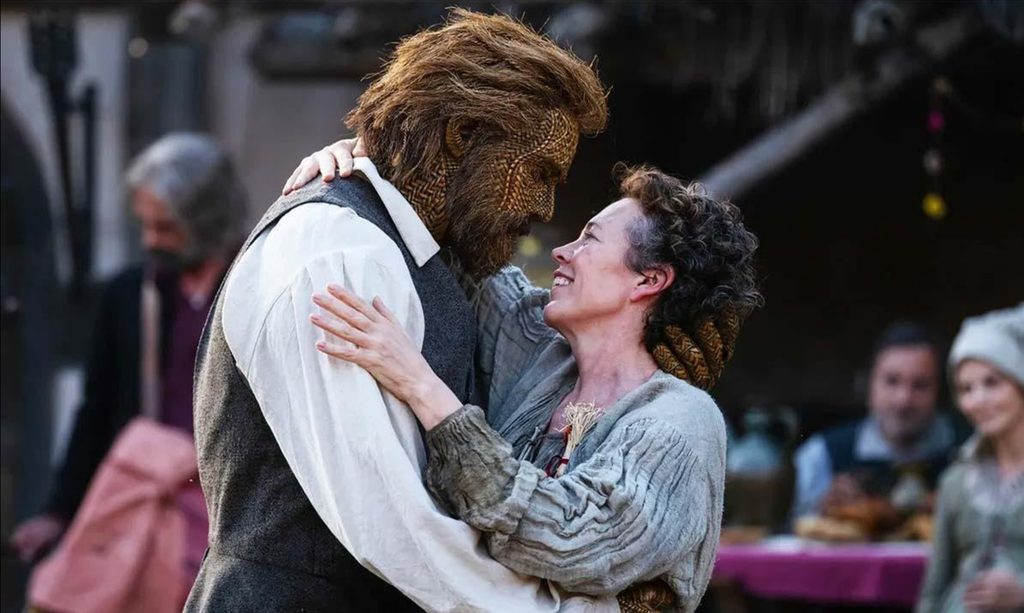
Instead of seeking validation from a village that rejects her, the Fisherwoman (Olivia Colman) takes her fulfillment directly into her own hands by commissioning her own partner. It operates as the ultimate modern anti-fairytale for a generation disillusioned by outdated societal expectations—proving that emotional safety, mutual respect, and genuine connection matter far more than conforming to traditional marriage norms.
2️⃣ “It’s easier to believe the bad than the good.” — The “Marites” Mirror & Toxic Village Envy
While the first half of the film delights in physical comedy, the second half delivers a sharp social critique that feels uncomfortably relevant to today’s internet culture. The villagers aren’t actually upset that a man was built out of basketry; they are furious that an outcast whom they deemed “lesser” managed to find genuine happiness.
It perfectly encapsulates modern mob mentality and “Marites” gossip culture. The film subtly demonstrates how toxicity and malice often stem not from a desire to acquire what someone else has, but from a bitter resentment that someone you look down upon dares to thrive without your permission.
3️⃣ “He has his days, I have mine, and we have our nights.” — Olivia Colman’s Masterclass in Unapologetic Joy
Olivia Colman delivers yet another powerhouse performance, balancing broad, laugh-out-loud physical comedy with quiet, heartbreaking vulnerability.
As the Fisherwoman, she embodies a character who has spent her life being mocked by her community, yet refuses to shrink her newfound joy just to make miserable people feel comfortable. Colman gives the film its emotional heartbeat, grounding what could have been a silly gimmick into an empathetic portrait of a woman claiming her right to be loved.
4️⃣ “The load is always lighter when you are by my side.” — Alexander Skarsgård Redefines Masculinity
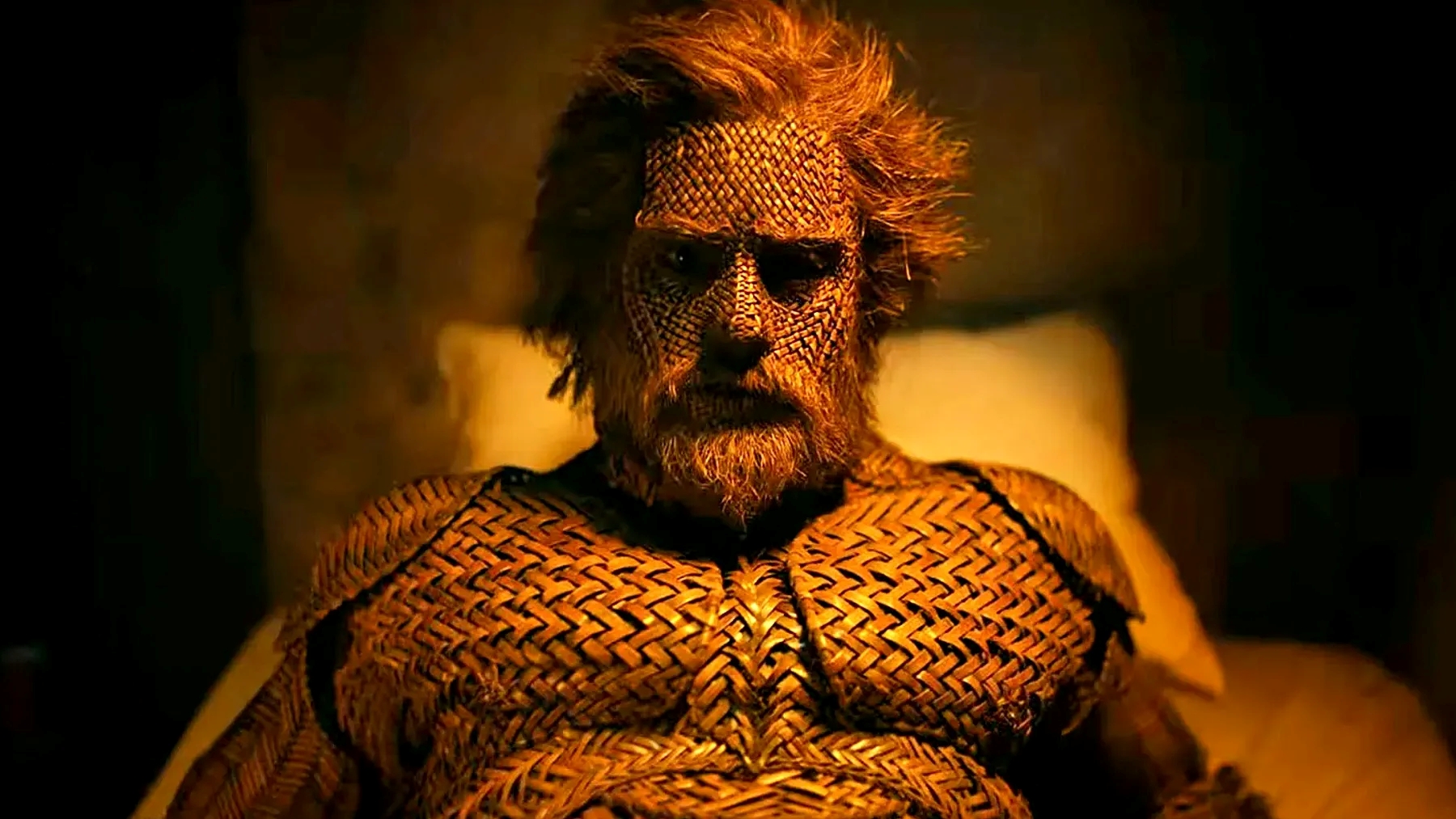
From being a thousand-year-old vampire king (True Blood) to Tarzan (The Legend of Tarzan), a feral Viking berserker (The Northman), an unhinged tech mogul (Succession), a terrifying apocalyptic entity (The Stand), a socially anxious AI assassin (Murderbot), and now a husband literally woven from twigs and reeds (Wicker)—Alexander Skarsgård has built a career out of taking a classic, sculpted leading-man frame and filling it with cinema’s most wonderfully weird, complex, and unhinged characters.
His character stands in stark contrast to the human men of the village—he is physically impressive yet completely devoid of ego, posturing, or toxic insecurity. Skarsgård proves that true romantic appeal isn’t built on dominance, grand gestures or even looks, but on presence, quiet strength, and unwavering kindness.
5️⃣ “I’ll be fixing the bed this afternoon. It broke again.” — Why the Village Wives are Lusting
One of the funniest running dynamics in the film is how quickly the village women become obsessed with the Wicker Husband. Their attraction isn’t just physical—it’s driven by the sudden realization of everything their own real-life husbands lack.
In a community where men treat marriage as a chore and domestic partnership as entitlement, the Wicker Husband listens, cherishes, and prioritizes his wife’s pleasure and emotional well-being. When he casually drops lines at the pub about needing to repair their bed frame, it sends shockwaves of lust and envy through a female populace desperate for attentive partnership.
The word “Esmeringhoy” has been abused and overused so much recently, yet it somehow perfectly captures the exact energy of this film. In Wicker, intimacy isn’t treated as a squeamish after-thought or over-sanitized for fragile modern sensibilities—it is bold, brash, unapologetically sensual, scorching hot–and even funny.

Wicker reclaims raw, uninhibited passion. There is nothing timid, sanitized, or subtle about what happens behind closed doors between the Fisherwoman and her WickerHusband; it is fiery, electric, and deliciously primal. It leans into an earthy, shameless heat that leaves the entire village peeking through their shutters—scandalized, confused, and secretly dying for a fraction of that fire in their own lives.
6️⃣ “Mother Nature provides. I merely augment.” — Gorgeous Medieval “Edward Scissorhands” Aesthetics
Visually, Wicker is a feast for viewers tired of flat, green-screen-heavy blockbusters. The production design builds a tactile, handcrafted coastal world that feels equal parts rustic medieval village and dark fable.
Supported by a stand-out performance by Peter Dinklage as the philosophical Basketmaker, the movie carries a rich aesthetic reminiscent of classic fantasy films like Edward Scissorhands or The Princess Bride, giving every frame texture, warmth, and atmospheric charm.
7️⃣ “A gift to the self is not noble. Nor lucrative.” — Top-Tier Cinema for Just ~₱270
In an era where movie tickets can feel overpriced for mediocre big-budget remakes, Wicker delivers maximum bang for your buck. At a standard local ticket price of around ₱275 in Metro Manila and ₱230 outside Metro Manila, there’s no reason not to see in with friends in the Cinema. It offers tight pacing, superb acting, genuine thematic depth, and continuous laughs across its crisp 105-minute runtime.

THE VERDICT
⭐️⭐️⭐️⭐️⭐️⭐️⭐️⭐️⭐️ (9/10)
“Equal parts absurd comedy and razor-sharp satire, Wicker takes the classic fairytale formula, flips it on its head, and ‘weaves’ a glorious masterclass in storytelling of our marites culture—proving that in a world fueled by schadenfreude and small-town malice, unbothered peace is the ultimate plot twist.”
Wicker is showing exclusively at SM Cinemas and distributed by Creazion Studios.