
Don’t get me wrong. I love being Filipino and I could not imagine myself living in another city in the world. But every time I come home from a trip from Singapore, there’s always a feeling of disappointment and hopelessness that we could never be like Singapore.
Last month I was in Singapore to join the Huawei Innovation Day, and unlike my prior trips where we commuted via shuttle service and taxis, this time we were encouraged to try out the public transport just to have a feel of what’s it’s like to live in a “Smart City” such as Singapore.
For first timers, Changi Airport can be quite daunting, it’s a good thing that there are lots of stations and kiosks that can guide you around if you don’t feel like heading over to the information counter to ask for questions. There are also lots of materials in several languages to help you find your way around the enormous airport.
Since we wanted to take the bus, the first thing we did was to look for the bus stop. It only took us a couple of minutes to find our way and we didn’t even have to ask anyone for information. The signages were very easy to follow and understand. Next was we hadto was find the right bus number that would take us to the bus stop nearest our destination.
The bus arrived just as the schedule indicated and I thought it was going to be a long wait since only four of us boarded the bus. What surprised us was after we all got into our chairs, the driver suddenly stood up, took his bag and bid us goodbye- (which was kinda crazy), but he informed us just to stay in the bus and that another driver would be coming to take over in a few minutes.
Unlike in Manila where our drivers don’t have shifts and have to park their buses back to their garage and remit their payments, bus drivers in Singapore can end their shifts at a particular station and they don’t even have to wait for their substitute as the bus is locked and secure. Passengers who wanted to board the bus had to line up and wait for the next driver which arrived about five minutes later. They don’t also have conductors who collect payment as commuters have prepaid cards and all they have to do is tap it upon entry.
Riding a bus in Singapore was quite a different experience as it wasn’t as crowded compared to our buses here. There were CCTVs inside the buses to capture any untoward incident that, so you’ll always feel safe. The bus is well maintained, cool and very comfortable as everyone gets to have a seat. You also don’t see people rushing in or pushing each other, as they all are patiently lining up, knowing that the next bus will arrive in just a few minutes.
It’s the same thing with their trains and train stations. While it does get crowded during rush hours all the stations are air conditioned and a train arrives every 3 or 4 minutes, so the wait is really quite bearable not to mention comfortable.
Another thing worth mentioning during that trip was when our guide advised us that since it was rush hour traffic would be bad and that it would take a while for us to reach our next stop….I thought she was just exaggerating because we were in traffic for only 15 minutes or so…15 minutes and she was already apologizing!
Singapore not only gave me a taste of what its like to live not only in a first world city, but also in a SMART CITY. Before that trip , I always thought having WIFI everywhere was enough but as I would learn, WIFI is merely the tip of the iceberg.
FIRST ASIAN INNOVATION DAY
The first Asian Innovation Day, was jointly hosted by Huawei and the National University of Singapore. Read my coverage here.
Innovation Day is a flagship series focused on global innovation hosted by Huawei. Thus far, Huawei Innovation Day has been successfully held in Stockholm, Milan, and Munich hosted by Huawei. The first Huawei Innovation Day Asia in partnership with the National University of Singapore, aims to build a platform for ICT players in Asia to communicate how to build an ecosystem.
The purpose of the event was not only to showcase Huawei’s technical innovations but also discussion on how to create or become a Smart City.
In his speech Mr. Li Jin’ge Huawei President of Asia Pacific Region, said “There is a saying that goes, “Walk alone if you want to go fast. Walk with a group if you want to go far.” In the past, the innovative spirit, culture of sharing, openness, and collaborative political environment in Asia have been indispensable to its prosperity and rapid development.”
“In the future, I hope that all governments, industries, and academic institutions continue to be open and collaborative, working together to build a better, more integrated ICT ecosystem, build Smart cities, realize digital transformation, and create a Better Connected Asia.”
So as I was observing all these delegates and listening to the speeches all I could ever think about was if we will ever get the chance to have smart cities as well.
Lets face it everyone wants to live in the city and with about 44 million people being added to Asia’s urban population each year the population explosion poses a big challenge to the existing transportation, power and utility networks of a city resulting in problems such as traffic congestion, power outages inadequate waste management and a general decrease in the quality of life. Thus the need for more intelligent and highly connected “Smart Cities” with a strong ICT infrastructure has never been more urgent.
GOVT ROLE TO BECOMING A SMART CITY
Joe So, Huawei’s CTO for Industry Solution, defines a smart city as a program of initiatives undertaken by a city owner, operator or governing entity in order to improve the quality of experience for residents, business and visitors by using ICT.
“Cities are going to be more and more crucial to life as we know it, the UN estimates that 67% of the world’s population will live in a city by 2050. Why? Because of expectations of a better quality of life, prosperity, better job and security.”
“Remember, there is no such thing as a smart city unless you have the connections and collaboration of each of the system.” So added.
“Before you can start any smart city, I believe the most important thing is to have a vision. Where do you want to go? What do you want to build? What is your objective? Every city has different kinds of pains—you need to address your pain.”
“And the most important thing to remember when you build a smart city, don’t just involve the government, you need to involve your citizens, because they will be the end users.”
CAN WE TRANSFORM INTO A SMART CITY?
Makati, Bonifacio Global City, and Eastwood are among the most modern cities we have, and could be prime testing areas if we ever get past through the initial stages.
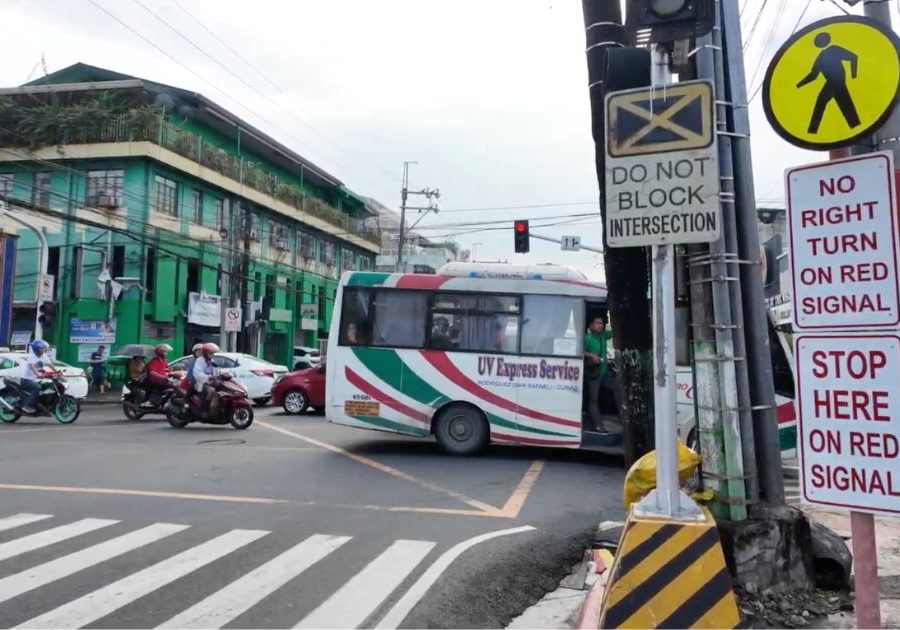
But I think that can only happen if our government leaders have the vision and resolve to really improve the quality of our Urban Living conditions..
A few weeks ago I had the chance to sit down and interview former Metropolitan Manila Development Authority (MMDA) chairman Francisco Tolentino, and while the initial questions from our fellow bloggers kept going back to solving the traffic problems, Tolentino made some very good points about the programs he started in his department.
“You have to remember that the MMDA has several other mandates besides solving the traffic problem, such as public safety, garbage disposal, flood control and sewer management, health and pollution control and urban renewal.”
Tolentino shared that one of the biggest challenges for the MMDA to execute its plans is coordinating with all the city mayors and having them comply to their proposals. It’s a good thing Tolentino said he got the support of many local government officials.
Tolentino likewise laid a bit of a foundation for should we ever get the chance to become a “smart city” with the various technological upgrades he made to the MMDA as well as the development of several mobile applications he spearheaded. These include the strong presence of @MMDA on Twitter and Facebook, the carpooling app called Friend Trip, accident alers, metro manila shakedrill initiative, MMDA Traffic mirror and MMDA traffic Navigator which gives your almost real time updates about the traffic situation in major thoroughfares.
But what struck me most about his platform is his proposal to establish the Philippine Urban Development Commission—an agency that will work closely with LGUs to promote the concept of planned cities that will prevent the problems experienced in Metropolitan Manila from happening elsewhere. “Traffic is getting worse in Manila and we don’t want the same thing to happen to Metro Cebu and Metro Davao. If we ever want to transition into a smart city, I think putting up a centralized department will be the key.”
He also seeks empowerment of local government units and establishment of regional clusters for increased economic benefits at the grassroots through several proposed amendments to the Local Government Code.
He says this will lead to an increase the allocation of Internal Revenue Allotment based on performance and its automatic release to local government units (LGUs); create a Police Youth Reserve Corps to help in peace and order and disaster response; establish and support community colleges supported by the national government offering courses attuned to the needs of communities where they are located and subsidies for the National Government; establish community airports in support of tourism.
His other proposals likewise include setting up of a well-planned system for rehabilitating communities adversely affected by natural and man-made disasters, with the assistance of the private sector; protection of our natural environment and the integrity of the ecology so that future generations of Filipinos can live sustainably through responsible mining coupled with assured revenues for host communities to be used for community development projects.
check out the interview here:
To help ease the burden of parents, he wants children in school to automatically become direct beneficiaries of PhilHealth and educational health insurance as an effective way of investing in their future and in the future of our country.
Developing a SmartCity may still be a long way off with our current situation and everyone still focusing on the worsening traffic problem in metro manila, but if visionaries like Tolentino who has first hand experience on how to handle our urban problems….there might still be that flicker of hope and a light at the end of that crowded traffic tunnel yet.
About Francis Tolentino
Atty. Francis N. Tolentino is the Chairman of the Metropolitan Manila Development Authority (MMDA), tasked to supervise and coordinate metrowide services of Metro Manila without prejudice to the autonomy of the affected 17 local government units. Prior to this, he was appointed, then elected, as Mayor of Tagaytay City for three consecutive terms (1995-2004) and was the President of League of Cities of the Philippines (2001-2004), and EVP of the Union of Local Authorities of the Philippines (2001-2004). He is a Doctor of Judicial Science Candidate (International Environmental Law) of Tulane University Law School (New Orleans, USA), a Master of Laws (LLM) graduate at the University of London (England) specializing in Public International Law (with Merit, 2nd Honours), a Master of National Security Administration (MNSA) degree holder at the National Defense College of the Philippines(Ranked #6 out of 55 graduates), a Graduate Diploma holder in Public Administration from Robert F. Wagner Graduate School of Public Service, New York University USA), a Bachelor of Laws (LLB) graduate from Ateneo de Manila University Law School (1984) and a Bachelor of Arts (Philosophy) graduate of the Ateneo de Manila University (1980).